
 Souvenirs from Latvia
  Baltic States
 How Souvenirs Appeared: From Pilgrims to Fridge Magnets
Historians believe that the earliest souvenirs appeared in antiquity and during the early Christian era. Pilgrims traveling to holy sites would bring back small objects as proof of their journey. These items served as reminders of the trip and as evidence that the sacred place had been visited.
One of the earliest examples is the ampulla. These were small glass or metal containers used by pilgrims to carry holy water or oil from religious sites. Some of these objects date back to the 3rd–4th centuries during the Roman Empire. Such items also had symbolic meaning — they acted as signs of memory and faith, confirming the pilgrimage.
In the 18th–19th centuries, the tradition of souvenirs took on a new form. Wealthy Europeans traveled on the so-called Grand Tour, a long cultural journey through Europe’s most important cultural centers. From these travels, they brought back paintings, small sculptures, and decorative objects that reminded them of the places they had visited and the experiences they had gained.
By the late 19th century, world exhibitions significantly boosted the popularity of souvenirs. One famous example is the 1893 World's Columbian Exposition in Chicago, visited by around 26 million people. During this exhibition, souvenir spoons became extremely popular, and collecting them turned into a widespread trend. It was one of the first moments when souvenirs began to be mass-produced for tourists.
Interestingly, the word “souvenir” comes from French and originally meant simply “memory.” In the 11th century, the French word referred to the act of remembering. Only in the 17th century did it begin to describe an object that reminds someone of an event or journey. In English, the word was first recorded in 1775.
The modern souvenir industry developed after World War II, when tourism became accessible to a much wider population. This period introduced many familiar souvenirs that are still popular today — fridge magnets, snow globes, miniature landmarks, and T-shirts with city names.
Today, the souvenir market is an important part of global tourism. The trade of gifts, souvenirs, and similar items reaches hundreds of billions of US dollars each year and continues to grow alongside international travel.
Over the centuries, souvenirs have evolved from simple pilgrim relics into colorful symbols of modern tourism. Yet their meaning remains the same — to preserve memories of journeys. A small object brought back from a distant place often becomes a bridge to emotions, people met along the way, and places once visited. For this reason, souvenirs remain not only commercial goods but also small carriers of stories about travel and discovery.
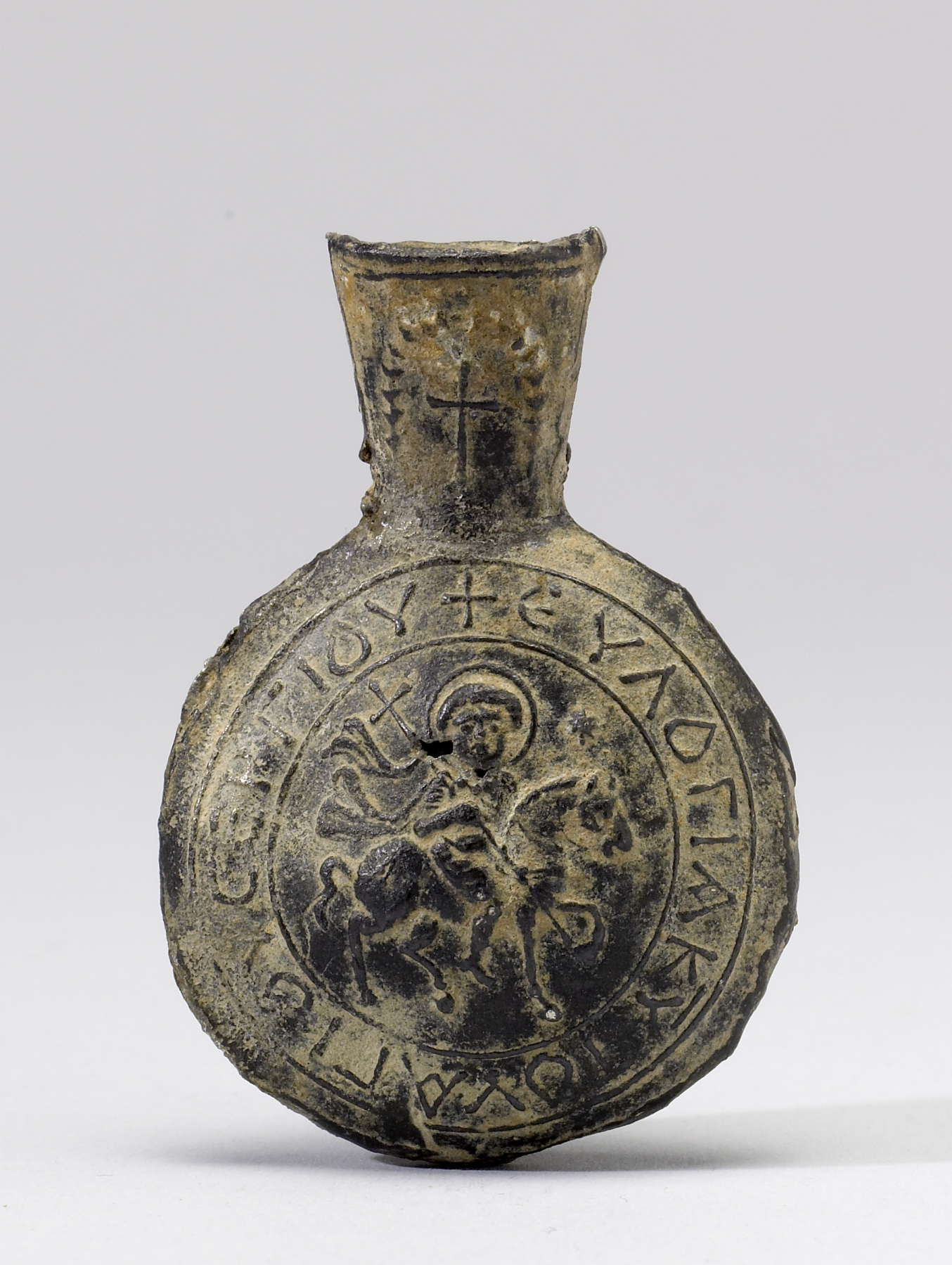
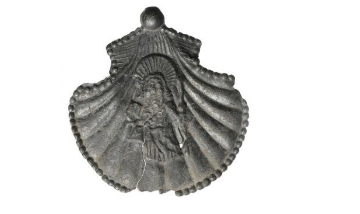
Pilgrim ampulla (6th–7th century) Compostela pilgrim badge depicting St James (15th century)
Source: Walters Art Museum, Public Domain. Source: Museum of London, 85.79/3